Six reasons this investment
is structurally compelling.
A market structurally forced to change
The UK produces 3.5 million tonnes of sewage sludge annually. 90% is spread on agricultural land, contaminating soils with PFAS, microplastics and heavy metals. Incoming regulation will ban this practice. Simultaneously, domestic bioethanol production has collapsed: Vivergo closed in 2025, leaving the UK importing virtually all of its 1.4 billion litres of annual demand. Greenward sits at the intersection of both crises.
First-mover with no domestic competition
There is no commercial-scale waste-to-bioethanol operation in the UK. Greenward's first plant will be the first. The technology is engineered in-house, trialled on real paper waste, and undergoing independent engineering validation. The IP is proprietary and owned outright. The window to establish this position is now, and Greenward is already through it.
Supply agreed, offtake in negotiation
Greenward is not building a plant and then looking for customers. The first facility is sited with its feedstock supplier under agreed heads of terms, including a long-term inflation-linked lease with consistent, contaminant-free volumes. Offtake is in active negotiation with tier-one global buyers. Gate fees begin on intake.
Six revenue streams from a single asset
Each Greenward plant generates six independent revenue lines: gate fees, bioethanol sales, RTFCs, the double waste-derived certificate rate (classification application with the DfT), carbon credits (subject to LCA and registry approval), and carbon capture. The diversity of these streams creates a resilient, multi-layered return profile unavailable to any single-stream competitor.
Modular, scalable and replicable
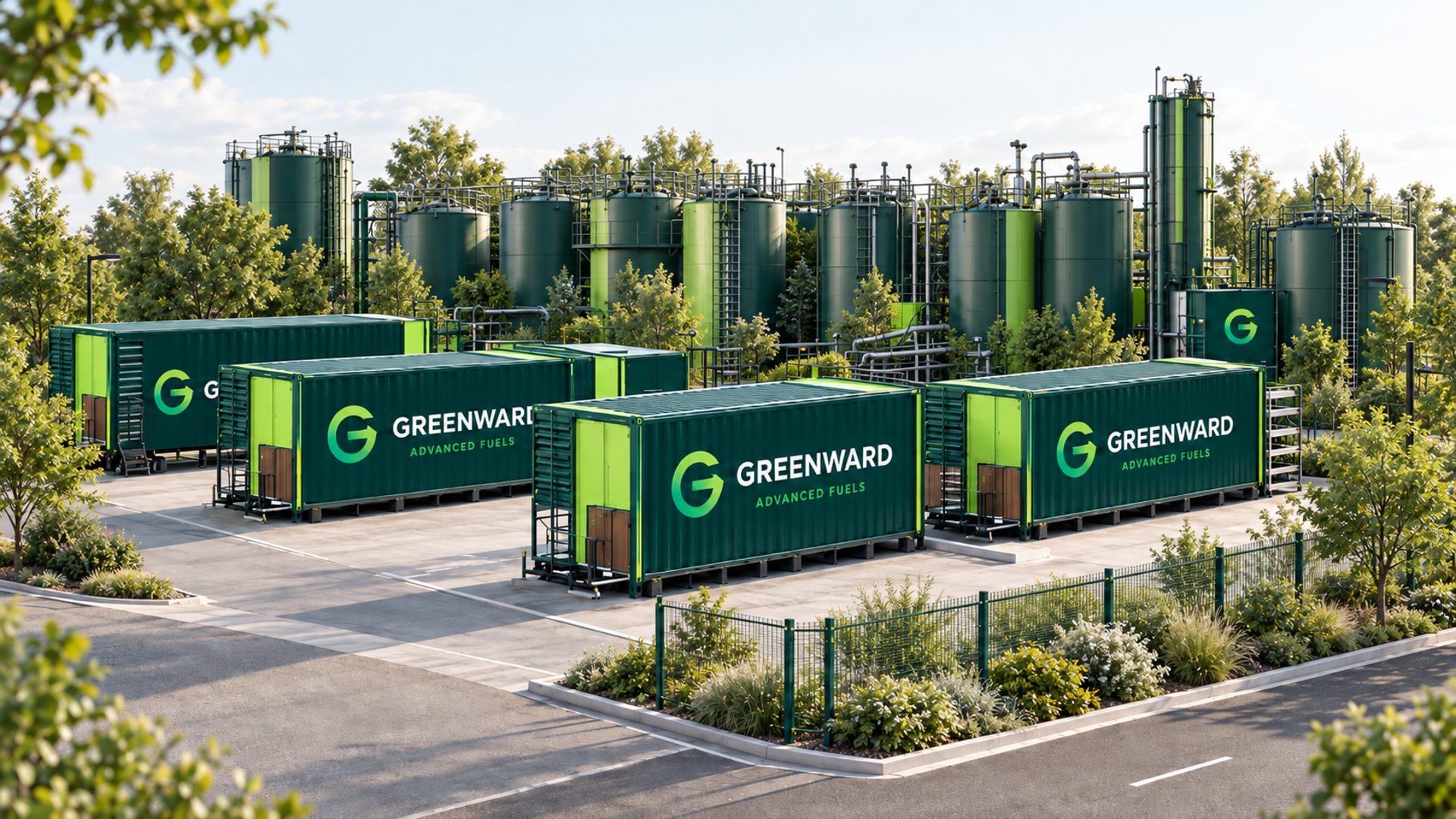
The Greenward system is factory-built in 5 months, precommissioned before it arrives on site, and installed in 6 to 8 weeks on under 1 acre. The full processing cycle takes under 48 hours. Greenward has mapped 35+ priority global sites near major ports, each a replicable deployment. The proprietary IP also includes a route to Sustainable Aviation Fuel via alcohol-to-jet technology. Each plant is a replicable unit. The model scales horizontally.
Policy tailwinds locked in by statute
The UK Renewable Transport Fuel Obligation mandates increasing blending targets through 2032 and beyond. Eligible waste-derived bioethanol earns double RTFCs versus crop-based ethanol, a statutory advantage that cannot be competed away. Greenward's feedstock classification applications are with the DfT; as the UK's first dedicated waste-to-bioethanol developer, Greenward is positioned to capture this premium in full.
Request access to the
investor dataroom.
Greenward shares its investor materials through a secure dataroom: the financial model, site and trials documentation, technology validation reports, and the regulatory pathway. Available to qualified investors under NDA.