The process thatchanges everything.
A proprietary bioprocessing system developed by our own engineering team. It converts lignocellulosic waste into high-grade bioethanol in under 48 hours, without toxic chemicals, without bio-gas, without food crops.
Cellulose in. Ethanol out.
Enzymes do the work.
Every Greenward plant runs one piece of chemistry: unlock the sugars locked inside lignocellulosic waste, then ferment them. No acid, no high pressure, no food crops. The enzyme cocktail is ours, tuned to each feedstock.
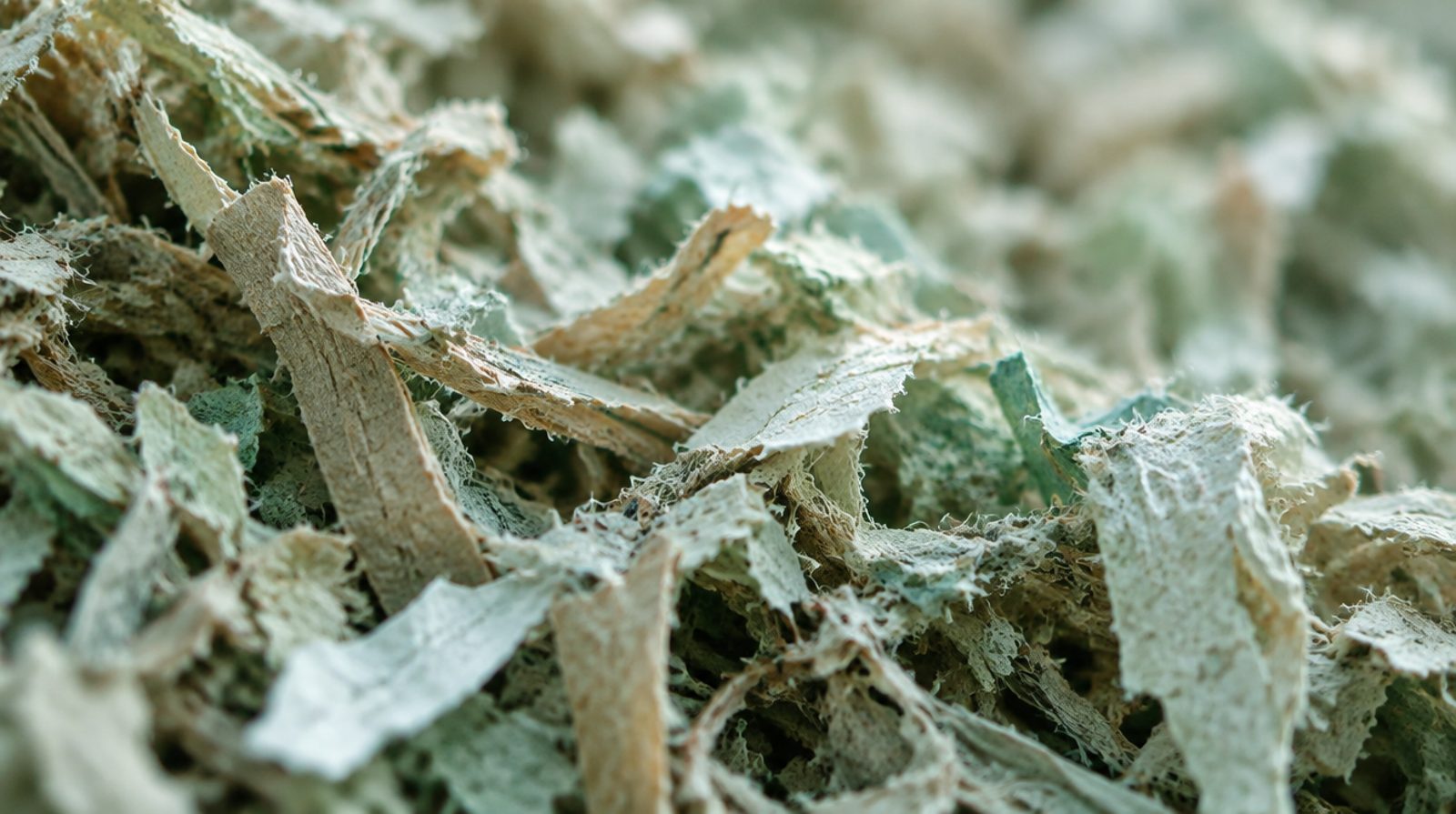
Lignocellulose, opened up
Paper-mill rejects, green waste and sludge are mostly cellulose and hemicellulose bound in a lignin matrix. Front-end processing screens, macerates and homogenises the stream and strips out the contaminants that defeated earlier operators.
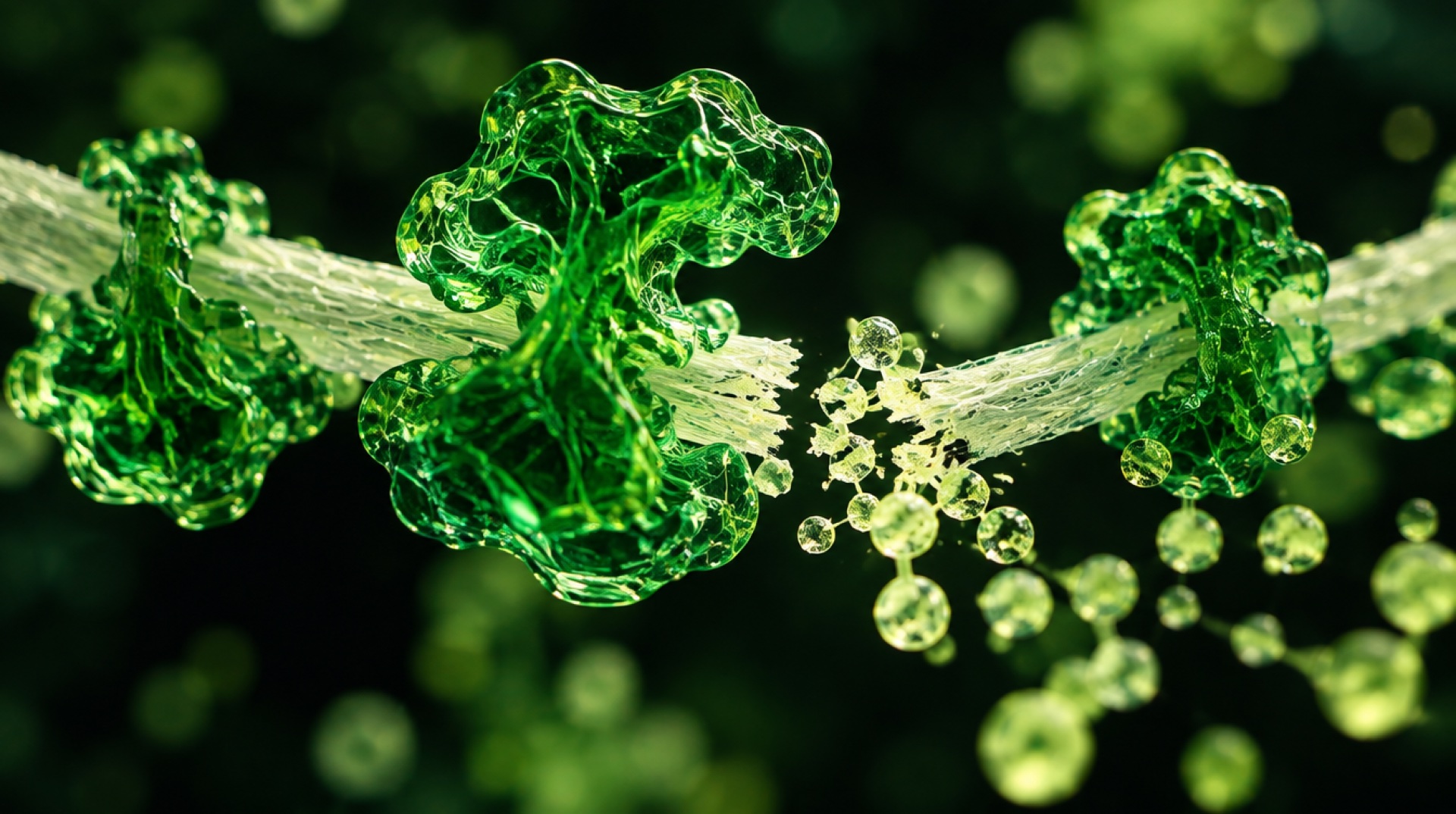
Enzymes cut cellulose into sugars
A proprietary enzyme cocktail, not acid, breaks the long cellulose chains into fermentable glucose at mild temperature. High-throughput screening tunes the cocktail to each feedstock, including the coatings, inks and fillers in paper waste.
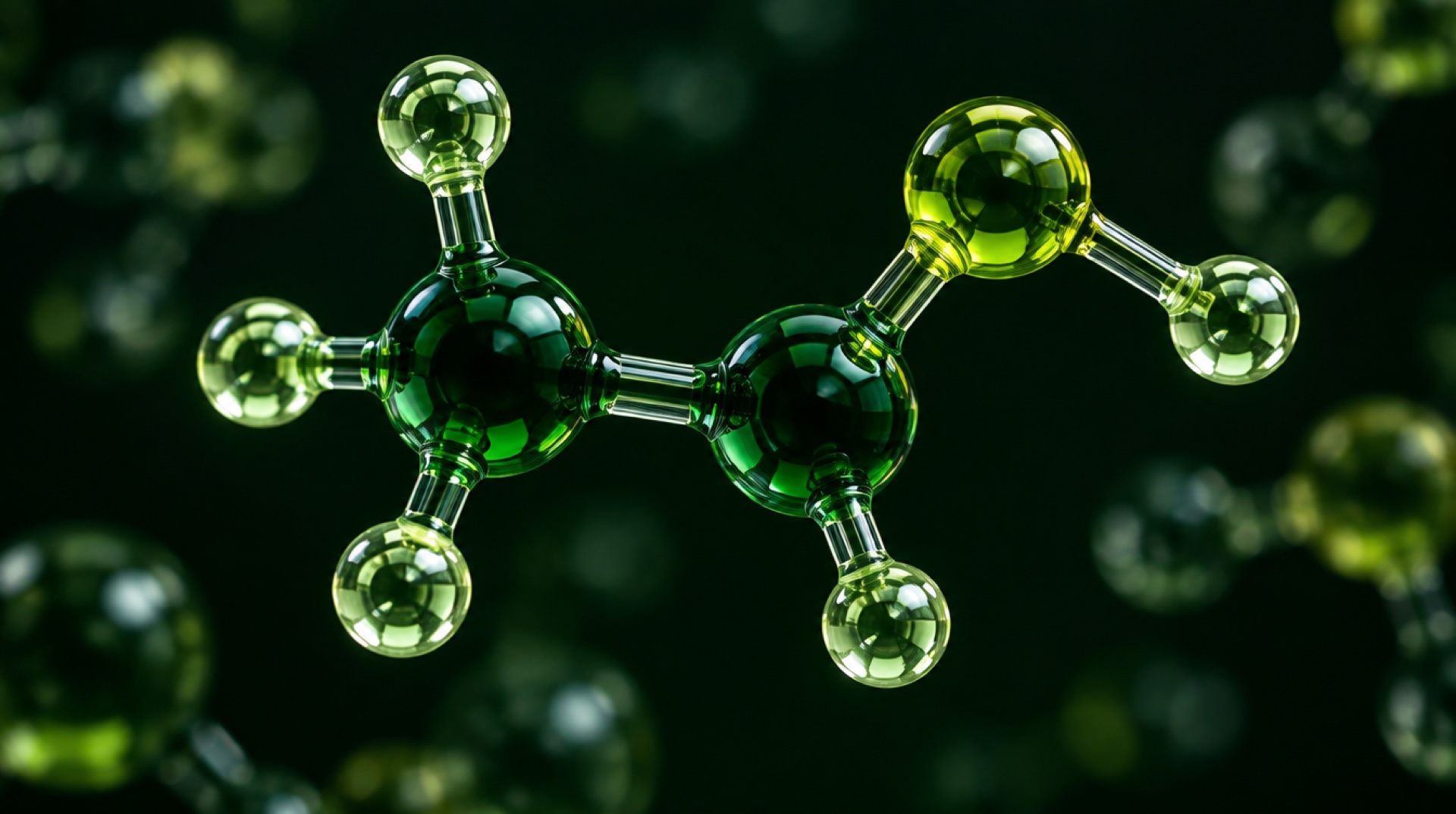
Sugars become ethanol
Yeast converts the glucose to ethanol in eight staggered fermenters at 25°C, in under 40 hours. Distillation takes it to 95%+ purity. The CO₂ is captured, the lignin fuels the boiler and the water is recycled by reverse osmosis.
Waste in.
Fuel out.
One continuous flow from the tipping floor to the tanker. Every stage is factory-built, factory-precommissioned and installed on site in weeks.
Front-End Processing
Waste is screened, macerated and prepared. Belt-and-braces contamination removal ensures clean feedstock entering the system.
Proprietary Enzyme Hydrolysis
Our proprietary enzymatic cocktail, not acid hydrolysis, breaks down complex lignocellulosic structures with precision.
Rapid Fermentation
Eight fermentation tanks at 25°C, staggered for continuous flow. Under 40 hours, against 40+ days for anaerobic digestion.
Distillation & Purification
95%+ purity (98.7% proof), meeting the EN15376 standard accepted by all major fuel suppliers in the UK and EU.
By-Product Recovery
Lignin powers the biomass boiler. Water recycled via reverse osmosis. CO₂ captured and reused. Zero waste to landfill.
What makes the Greenward process different
from everything that came before.
2G, not 1G
We process waste, not food crops. No land-use competition. No grain price exposure. Structurally superior economics.
Containerised and modular
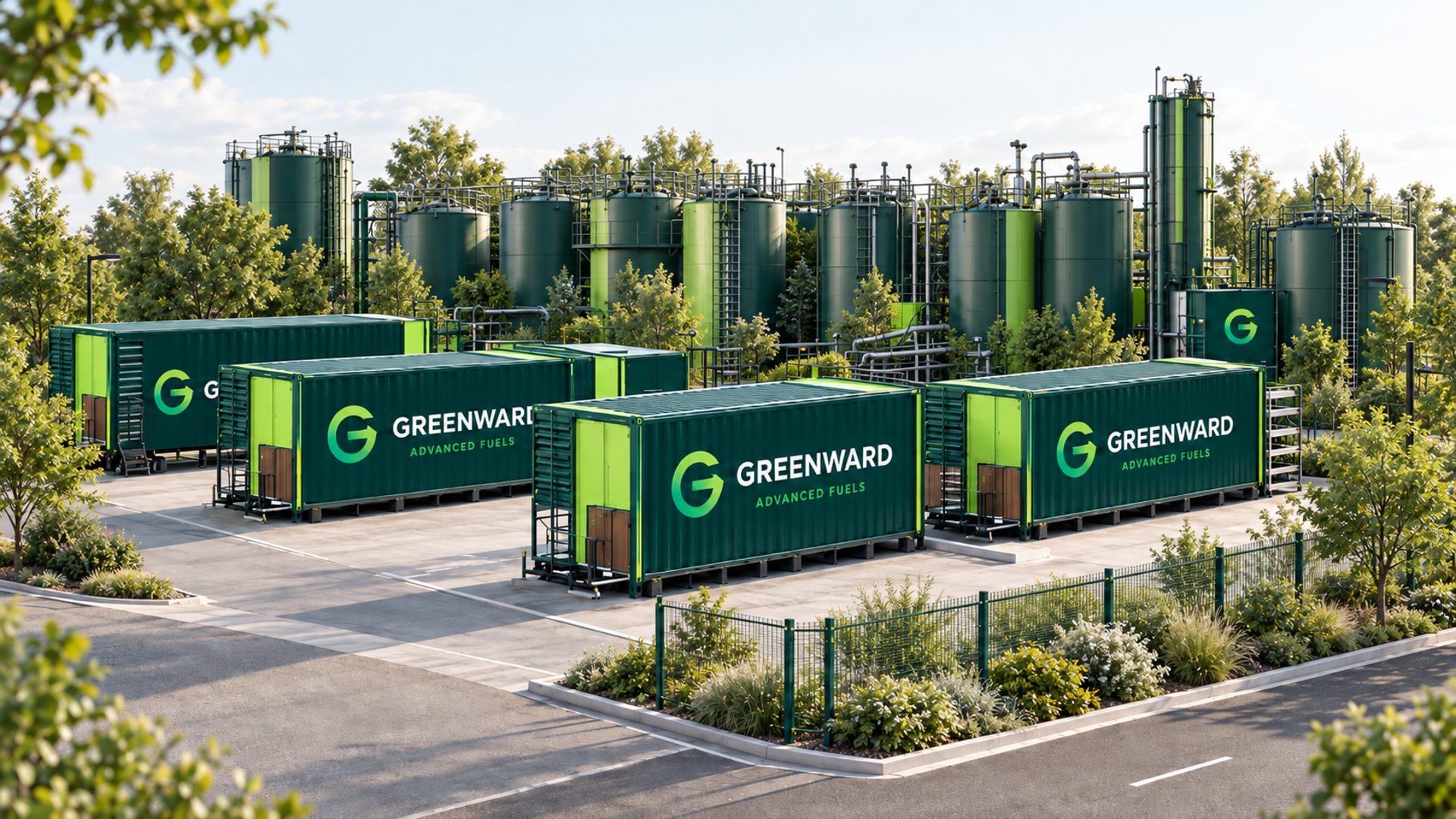
Factory-built in 5 months. Installed in 6 to 8 weeks. Under 1 acre. Deployable next to the waste itself.
Proprietary IP
Engineered in-house and owned outright. Proprietary IP, held by Greenward.
Tested, then validated
Engineered in-house and trialled on real feedstocks. The underlying process science has run at Stellenbosch University, and independent engineering validation is under way ahead of Plant 1.
Double RTFC value
Eligible waste-derived bioethanol earns 2 Renewable Transport Fuel Certificates per litre, double the crop-based rate under the UK RTFO. Greenward's feedstock classification applications are with the DfT.
HTS enzyme optimisation
High-throughput screening lets Greenward rapidly tune enzyme cocktail profiles for each feedstock, including the coatings, inks and fillers in paper waste. No competitor has this capability at this scale.
What the process
leaves out.
Engineered in-house.
Tested on real waste.
Designed by Greenward's own engineering team from detailed analysis of current and historic plants, white-paper reviews and practical engineering assessments. Paper-waste trials positive. Calcium carbonate recovery positive at 95 percent removal. Independent engineering validation is under way ahead of Plant 1, with process science that has run at Stellenbosch University.
Plant figures: Bio-Agri heat and mass balance, September 2026 (100,000 tonnes a year basis). Planning figures, validation under way.
Ready to see it
run on your waste?
Site operators, waste companies and offtakers: tell us your stream and volumes and we will come back with a plant footprint and an economics view.